
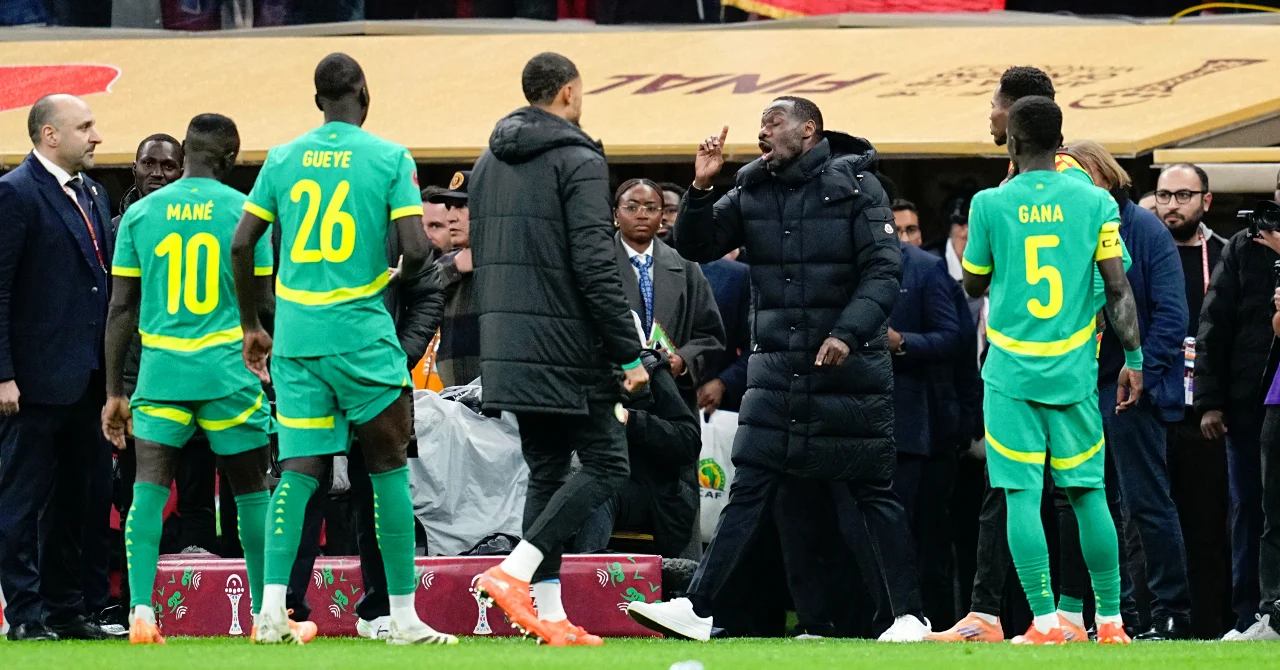
The outcome is near. Last January, Senegal won the CAN final against Morocco (1-0). A meeting marked by a strong protest from the Senegalese players, who had temporarily left the pitch to protest against a penalty awarded to the Atlas Lions at the very end of the game. But there was a twist: CAF declared Morocco the winner on the green carpet last March, considering that the Lions of Teranga had withdrawn by leaving the field. A decision which the Senegalese Football Federation (FSF) has decided to challenge before the Court of Arbitration for Sport. The decisive CAS hearing was held last Thursday in Lausanne, Switzerland. Following the pleadings of the two federations, the judicial body announced that its final decision will be pronounced “in a few days, or even a few weeks. »
Beyond the sporting issue, the dispute between Morocco and Senegal surrounding the CAN 2025 final raises important financial and legal questions. In an interview given to
TheBriefRenaud Duchêne, lawyer specializing in sports law, analyzes the possible repercussions for federations, the Confederation of African Football (CAF) and commercial partners.
One of the main questions concerns the bonuses already paid after the final. According to the lawyer, a possible reimbursement would depend in particular on the contractual clauses. If a sponsorship bonus was explicitly conditional on obtaining the title, its restitution could be requested in the event of an official modification of the result. However, such an approach seems unlikely, in particular because of the image issues for sponsors.
“If contractually these bonuses were provided for in the event of a final victory and the victory is withdrawn on the green carpet, this could be claimed in return by the sponsor. (…) Morally and even ethically, I find it hard to see a sponsor taking this type of action”he says.
Can CAF be attacked?
The responsibility of sporting bodies constitutes another sensitive point. For Renaud Duchêne, engaging that of the federations would be difficult. A possible action against CAF would require demonstrating the existence of serious dysfunctions. The possibilities for compensation therefore remain limited and will depend on the procedures initiated as well as the applicable rules.
Concerning appeals, the Court of Arbitration for Sport (CAS) remains the central body to resolve this dispute. A referral to the Swiss Federal Court could also be considered in the event of a procedural defect, without allowing a complete re-examination of the case on the merits. “Apart from the CAS in the context of these proceedings or the Swiss Federal Court in the context of proceedings relating to a procedural defect, there are no other jurisdictions or international arbitral tribunals competent to deal with other aspects of this procedure, to my knowledge”explains Renaud Duchêne.
Finally, this controversy could lead to a change in CAF regulations and sponsorship contracts. More precise clauses on bonuses, match interruptions and incidents could strengthen the legal security of African competitions. “It is likely that the main sponsors will modify their contracts and provide suspensive or more restrictive bonus clauses in the future”imagines the lawyer. Beyond the verdict, the case could leave a lasting imprint on the organization and economy of African football.
