
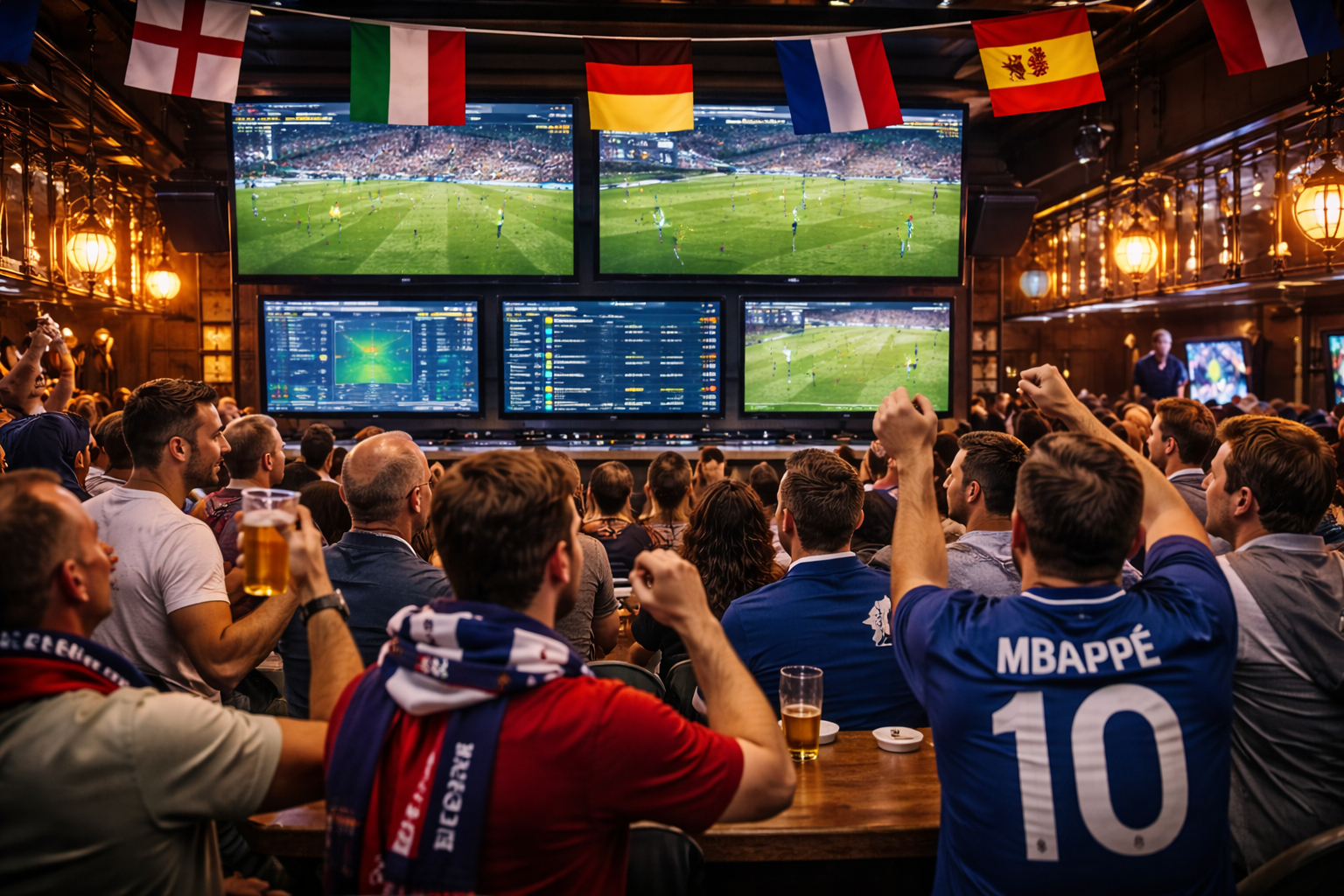
Football culture in Europe has always been defined by depth rather than isolation. Supporters may be fiercely loyal to a local club, yet their interest rarely stops at one league or one country. On any given weekend, a single fan might follow domestic fixtures, continental competitions, and rival leagues simultaneously. This cross-league awareness has become a defining trait of modern European fandom.
At the centre of this behaviour is real-time access to match information, which allows supporters to stay connected to football far beyond the stadium they know best.
A Continent of Parallel Competitions
Europe’s football calendar is uniquely dense. Domestic leagues run alongside cup competitions, while European tournaments layer additional narratives on top. It is common for Ligue 1 matches to coincide with Premier League fixtures, Serie A clashes, or late kickoffs in La Liga.
For fans, this creates a multi-threaded experience. Even while watching one match, attention often shifts to developments elsewhere. A goal in another country can change qualification scenarios, affect coefficient discussions, or reshape debates about form and momentum.
Following football in Europe is rarely a linear process.
Cross-League Awareness as Part of Fan Identity
European supporters often define themselves not only by who they support, but by how much they know. Awareness of results across leagues is a form of cultural literacy. Knowing how teams perform outside one’s domestic competition shapes conversations, opinions, and comparisons.
This is particularly visible during European competition weeks, when domestic results are interpreted through a continental lens. A weekend scoreline may be discussed differently if a club has an upcoming Champions League fixture or has just returned from a demanding away match abroad.
Live match information enables this broader perspective, keeping fans aligned with developments across borders.
Matchdays Beyond the Stadium
For many European fans, football consumption happens in shared spaces. Cafés, pubs, and living rooms often host multiple matches at once, with attention divided across screens and conversations flowing between games.
In these environments, real-time updates become essential. Fans rely on live information to track moments they are not directly watching. A sudden reaction in the room is often prompted by a score change from another league, announced before it appears on television.
Access to a reliable live score source supports this communal experience, allowing fans to remain informed without interrupting the flow of the match they are watching.
European Football as a Continuous Narrative
Unlike isolated sporting events, European football unfolds as an ongoing narrative. Results are constantly re-evaluated in light of what happens elsewhere. A draw may feel acceptable or disappointing depending on outcomes in rival leagues or groups.
This interconnectedness has intensified as coverage has expanded. Fans now follow leagues they may never attend in person, yet feel invested in because of European qualification paths, transfer markets, and stylistic contrasts.
Live updates provide the connective tissue that holds this narrative together.
The Role of Reliable Match Information
For cross-league engagement to function, information must be accurate and consistent. European football involves multiple governing bodies, competitions, and reporting structures. Consistency in match data ensures that fans across countries are reacting to the same events at the same time.
Organisations such as UEFA play a central role in coordinating European competitions and ensuring standardised match reporting across tournaments.
This framework underpins the reliability that modern fans depend on when following football across borders.
Digital Habits and the Modern European Supporter
European football fans are increasingly digital in how they consume the sport. Real-time updates complement traditional viewing rather than replacing it. Supporters switch between live broadcasts, conversations, and match updates fluidly, especially on busy evenings with overlapping fixtures.
This behaviour reflects the reality of European football itself: layered, simultaneous, and interconnected. Fans adapt by seeking tools that allow them to follow the broader picture without losing sight of the match in front of them.
A Shared Experience Across Borders
Despite linguistic and cultural differences, European football fans share a common rhythm. Goals, red cards, and late winners resonate instantly across countries. Real-time awareness allows these moments to be shared, discussed, and debated almost simultaneously.
As European football continues to evolve, cross-league engagement will remain central to how fans experience the game. Live score access supports this culture by enabling supporters to follow football as a continental story rather than a series of isolated events.
