
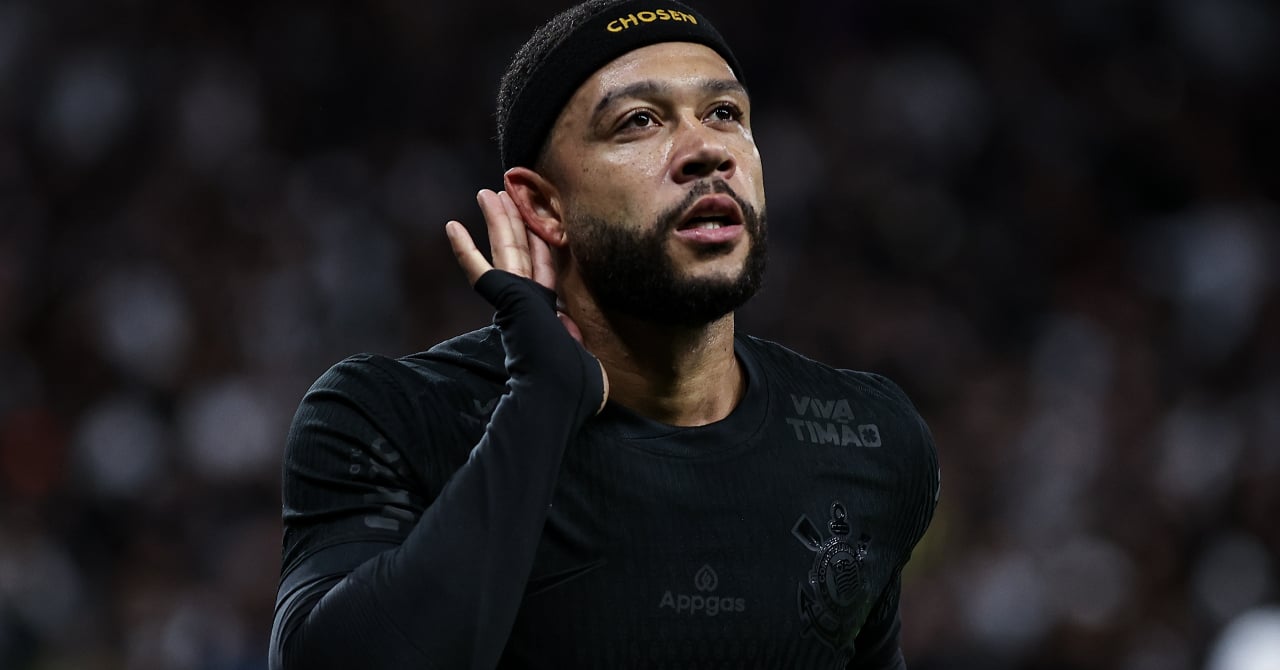
Brazilian football is in full swing, and it all started with a gesture. On March 27, during the electrical final of the Paulista championship between the Corinthians and Palmeiras, Memphis Depay allowed a small number of “showboating” while standing, feet joined on the ball, near the corner post at the end of the match. A technical gesture to protect your ball and save time, but perceived as an ultimate provocation by opponents. A general fight followed, more than 18 minutes of interruption and evictions.
Beyond the chaos, this incident had an immediate and radical consequence: in a fairly direct way, Memphis Depay triggers a change of rule in Brazil, reviving a passionate debate on the very essence of the game.
Memphis Depay originally a new law in Brazil.
Faced with an uproar and to prevent such incidents from reproducing, the Brazilian football confederation (CBF) reacted with unprecedented firmness. A new rule has been established: now, any player standing on the ball with the two feet will receive a yellow card for antactive behavior, the opposing team benefiting from an indirect free kick. The official justification evokes a
“Provocation to a rival and a lack of respect for the game”. The measure was applied without delay, illustrating the new policy in Brazilian football: yellow card for the players standing on the ball, after Depay, as in a recent U17 match.
Depay and Neymar Furious: “Football becomes boring! »»
This decision provoked the anger of several stars, symbols of creative and uninhibited football. Unsurprisingly, Memphis Depay criticized the CBF decision to punish players to stand on the ball, expressing his misunderstanding on social networks and in interview: “I came to Brazil to live the 'Jogo Bonito', but now we can no longer stand on the ball (…) I really wonder what the CBF advice looks like. »» His cry of the heart was joined by another icon of football spectacle. Depay was angry, but he was not the only one. Neymar, the local star and Santos number 10, followed suit on Instagram: “Football becomes more and more boring. »»
Basically, this controversy illustrates the permanent tension between freedom of technical expression, the essence of “jogo bonito” so dear to Brazil, and the need to maintain discipline and respect on the ground. The CBF chose its camp by favoring order and seeking to prevent overflows by a strict rule. But by doing this, is it not likely to abuse the game and to curb the creativity that made the legend of Brazilian football? The debate is open and far exceeds the borders of Brazil, questioning the balance to be found between spectacle and respect in modern football.
