
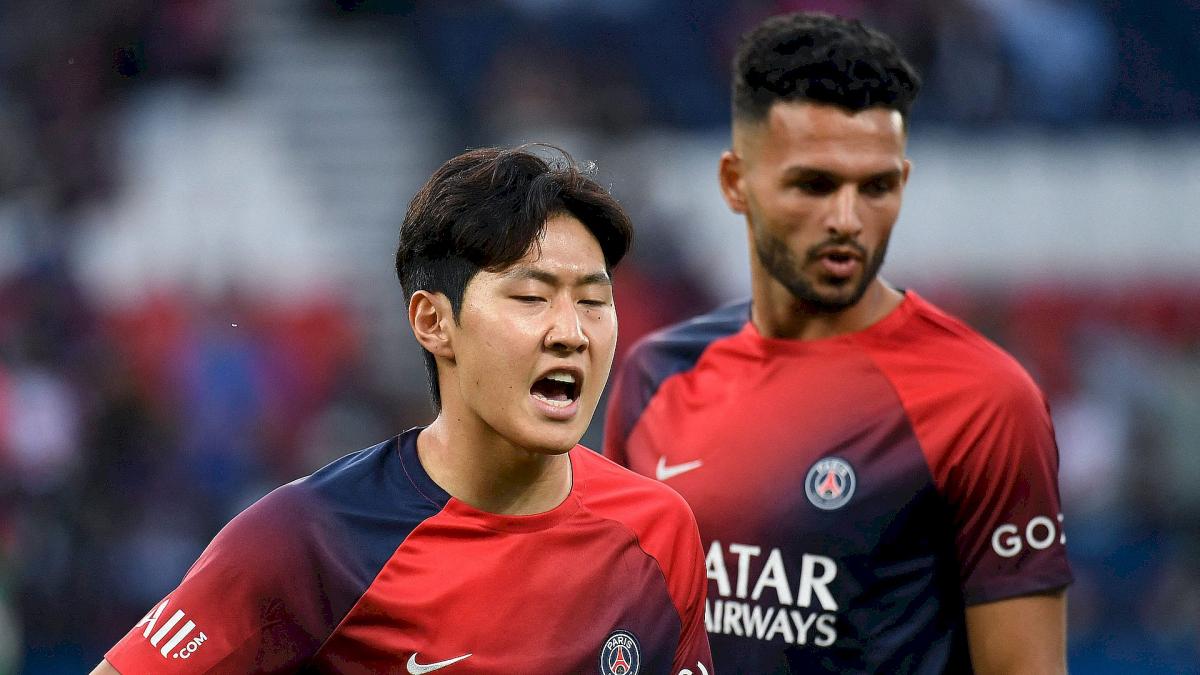
It was in the air, it is now official: Kang-in Lee has left Paris Saint-Germain to sign for Atlético de Madrid. The colchonero club formalized, this Saturday, the arrival of the South Korean international for an amount estimated at 40 million euros. An XXL transfer taking place a few days after that of Gonçalo Ramos, who left for AC Milan and which brought in €75 million + €5 million in bonuses for the double European champions. In total, the capital club will collect a nice check for 120 million euros. Enough to confirm the change in dimension of PSG.
Indeed, the Rouge et Bleu have long had a stubborn reputation: namely, that of a club capable of attracting the biggest stars, but incapable of making real capital gains on the transfer market. The free departures of many players or sales at knockdown prices regularly fueled criticism. But those days seem to be well and truly over. The files of Gonçalo Ramos and Kang-in Lee perfectly illustrate this new reality (68 million euros of capital gains made on these two players). Recruited in a workforce renewal project, the Portuguese and the South Korean were ultimately fully valued during their time in the City of Lights.
PSG now knows how to sell
A new turn which is not the result of chance. For several transfer windows, the Parisian club has, in fact, displayed a more coherent strategy. Recruitments are more based on age, progression potential and resale value. This approach finally contrasts with the years when the stacking of stars made sales particularly complicated, in particular because of very high salaries. The arrival of a new sports management, associated with a more rational policy, has also profoundly changed the management of the workforce.
Today, Paris no longer hesitates to sell when economic conditions are favorable, even if the player retains a certain sporting potential. The objective is clear: reinvest intelligently while maintaining a competitive workforce. An essential development at a time when financial fair play and financial control occupy a central place. No, PSG is no longer just a prestigious buyer, it is becoming a credible seller, capable of negotiating from a position of strength and maximizing the value of its assets. A discreet, but major transformation, which could well be one of the biggest progress made by the club in recent years. It now remains to be seen how the Parisian management will reinvest this money collected while many issues are now being talked about (Akliouche, Diomandé).
