
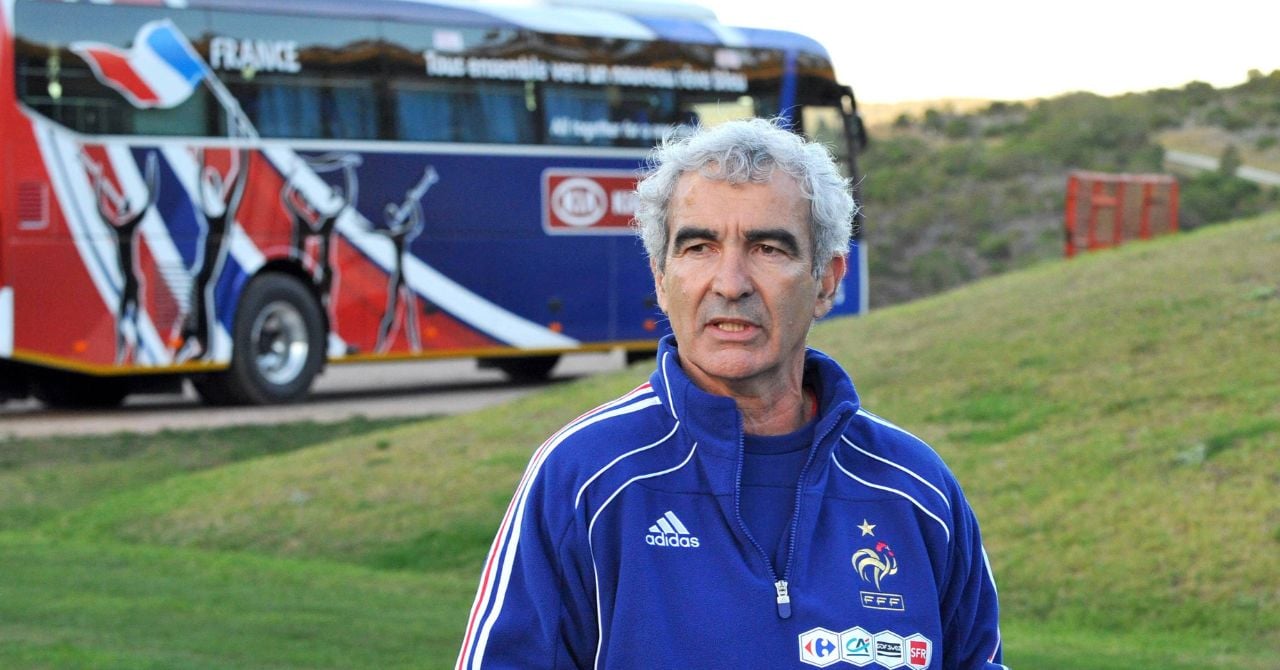
In 2010, the France team was at the heart of an unprecedented earthquake during the World Cup in South Africa. In the Knysna base camp, the Blues refused to train after the exclusion of Nicolas Anelka, causing one of the most notable episodes in the history of French football. This case is now the subject of a documentary broadcast by Netflix, entitled “The bus, the Blues on strike”.
Sixteen years after the events, Raymond Domenech came out of silence and reacted strongly to the broadcast of the film. The former Blues coach distances himself from the production and contests the way in which the events are recounted, even though he did not participate in the documentary.
On his According to him, this commitment would not have been respected. He criticizes the documentary for relying on a selection of biased extracts from his personal notes, giving a truncated vision of events and not reflecting his version.
“I am bruised and betrayed”
“It had to be a good documentary, where each version would be presented fairly. It was a film that was totally incriminating and nauseatingly biased… What I wanted to be therapy has become hateful trash… I am bruised and betrayed: this sounds like a rape of my soul. A theft of my emotions for a moment »he writes in particular.
The former coach also insists on the intimate nature of his writings, recalling that a logbook written in a crisis context is, according to him, not intended to be distributed without precaution. He claims not to recognize himself in the portrait painted on the screen and completely dissociates himself from the project, which he considers contrary to the principles of journalistic ethics.
