
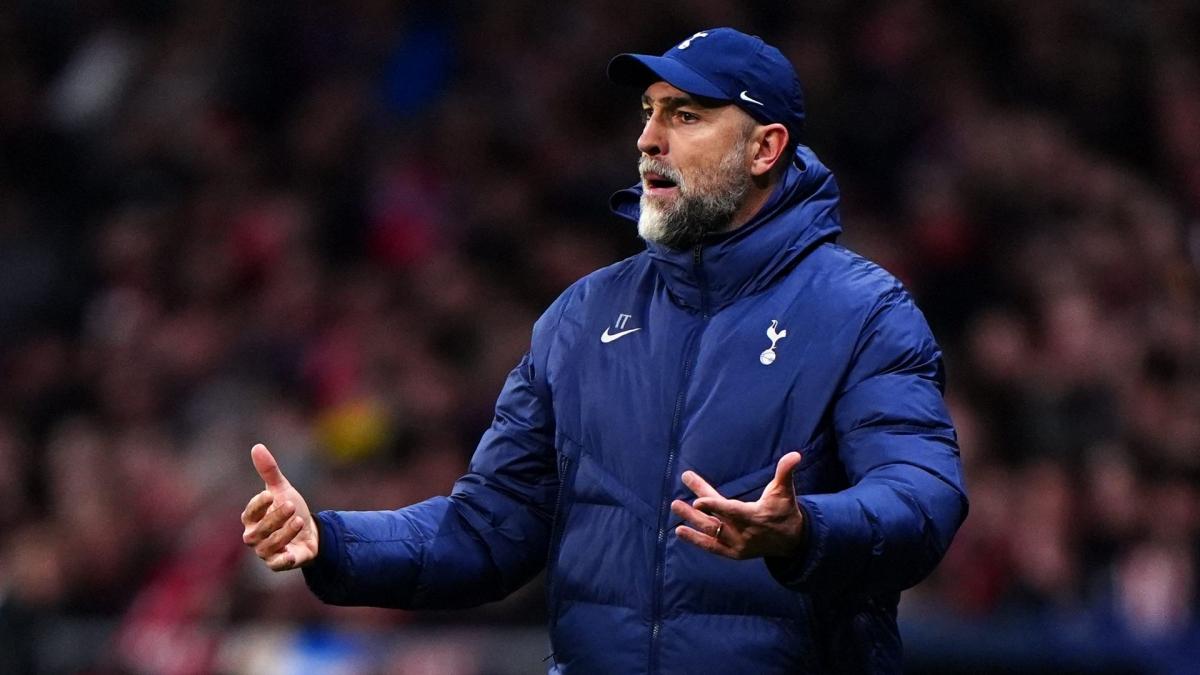
The case of Igor Tudor is fascinating in modern football. On the one hand, his tactical reputation remains extremely solid in the field, and many coaches and analysts recognize the richness of his playing principles which we have been able to observe occasionally at OM and especially at Hellas Verona. His aggressive pressing and his hybrid 3-5-2 organizations which shake up opposing structures have often been highlighted. On the other hand, his experiences on the benches follow one another without ever really being long-term, with adventures lasting on average a year maximum, or even much less. His express stint at Tottenham only lasted six weeks, with no victories in the Premier League. A new fiasco which perfectly illustrates this paradox. The former Croatian defender seems constantly stuck between two realities: that of a coach considered tactically brilliant, and that of a technician whose projects always end faster than expected. By seeing clubs stop after a few months, the question inevitably ends up arising…
Does the problem really come from Igor Tudor, or from the context in which he agrees to work? When we look at his recent career, a pattern repeats itself almost systematically. Igor Tudor often arrives as an emergency solution, a firefighter called to straighten out a complicated situation. At Udinese, he had already been recalled to stabilize the team twice. Same logic in his short stints at Galatasaray or PAOK, where he only has one season left. The same scenario is repeated later with this intense, but unique season at OM, only a few months at Lazio, then seven months at Juventus in an already fragile context. Each time, the native of Split arrives at a restless club, where urgency takes precedence over construction. In these conditions, judging a coach solely on the length of his mandates can be misleading, but he frequently intervenes in unstable environments where few technicians really manage to maintain continuity. The example of Tottenham could thus serve as a revealer, a case which symbolizes all the problems of his career.
And now ?
Because on a purely footballing level, Igor Tudor is not a classic coach. His approach requires time and, above all, total support from the group with player profiles chosen and sorted precisely by his staff. His systems, often based on aggressive individual markings, very high lines and rapid vertical transitions, are extremely physically and mentally demanding. This can produce spectacular results as the team assimilates the model, as seen at times in Marseille, but it can also cause phases of irregularity during the learning period. His Hellas Verona is still considered one of the most attractive recent teams to have graced Italian pitches in recent years. The problem is that the European behemoths, who are hungry for results and trophies, rarely give this time. In already tense environments, with popular pressure from ultra groups, impatient leaders and pressurized locker rooms, such a demanding method can quickly become difficult to implement. What constitutes Tudor’s tactical strength then paradoxically becomes its weakness since its ideas are sharp, ambitious, but sometimes too complex for projects where urgency dominates.
Ultimately, the question is perhaps not to find a reason for a supposed “Tudor Problem”, but rather why the Croatian systematically finds himself in this type of situation. For several years, the Croatian technician, who nevertheless enjoys real popularity on the market and in the press, seems to accept extremely risky missions: clubs in sporting crisis, tense internal political contexts, or already weakened management. At Juventus, he arrives in a period of economic and institutional turbulence. At Lazio, in a climate of conflict with president Claudio Lotito and a future recruitment ban. At Tottenham, in a club plunged into a sporting and identity crisis with nine coaches since 2019 and the departure of Pochettino. In other words, environments in which even a perfectly adapted coach would find it difficult to build over time. Igor Tudor remains a paradox of European football. A tactician recognized for his tactical intelligence, capable of transforming a team in terms of play, but whose career is marked by bench choices that are as perilous as they are precarious. Perhaps the real key to its future does not lie in an evolution of its ideas, but in a change of strategy with the mission of finally finding a stable project where its methods will have time to exist.
