
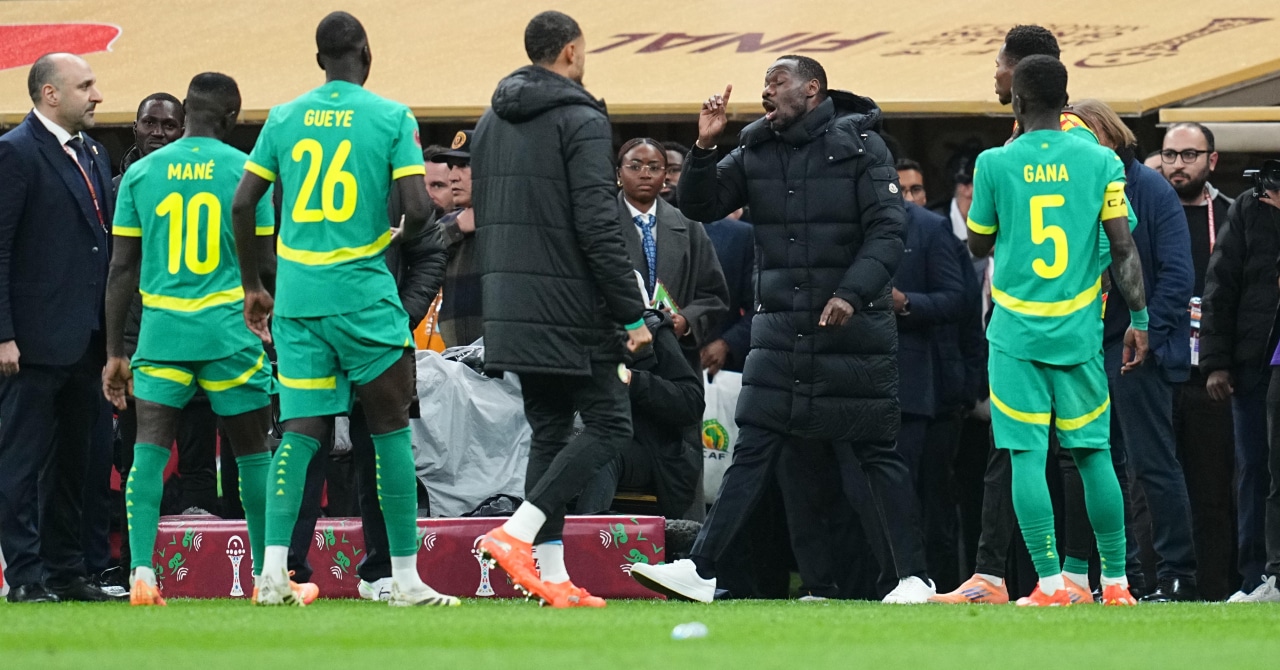
We thought the affair was buried, the page turned. Senegal celebrated its second African champion title, Morocco licked its wounds after a final lost at home in chaotic conditions. The first sanctions had fallen, and African football was trying to move on. But this Tuesday, the Confederation of African Football (CAF) decided to plunge the continent back into an unprecedented legal imbroglio. Appealed by the Moroccan Federation, the CAF appeal committee delivered a surreal verdict: Senegal was declared the loser by forfeit, and Morocco is therefore the 2025 African champion on the green carpet.
The text that changes everything, an interpretation that sparks debate
To justify this lunar decision, CAF relies on article 84 of its regulations, which sanctions a team which “refuses to play or leaves the field before the regular end of the match”. The body therefore considered that the temporary departure of the Senegalese players, who had left the pitch to protest against a disputed penalty, constituted a breach of the playing contract, justifying the loss of the match a posteriori. An interpretation which is, and will be, a huge debate.
Because the question is there: can the verdict still be invalidated? The answer is yes, and it is even the most probable hypothesis. The Senegalese Federation, which has 21 days to do so, will most certainly refer the matter to the Court of Arbitration for Sport (CAS) in Lausanne, the highest sporting court. And his arguments are solid.
The CAN 2025 final scandal may not be over yet.
The CAS, justice of the peace of a continent in crisis
Senegal will first be able to challenge the very application of article 82. The match had a legal end, since the referee authorized the resumption and the extension was played until its end. The departure was temporary, not a permanent abandonment. The argument of the disproportionality of the sanction will also be at the heart of the debates. Withdrawing a continental title two months after its delivery is a decision of unprecedented gravity, which violates the principle of legal certainty. Finally, the inconsistency of CAF itself, which had initially rejected the request for forfeiture, will be a weighty argument.
African football is therefore holding its breath. The court delivered its verdict on January 18. The CAS will have to say whether CAF has the right to rewrite history two months later. A legal battle begins, and it promises to be long and fierce. In the meantime, chaos reigns, and the image of continental football is, once again, terribly damaged.
