
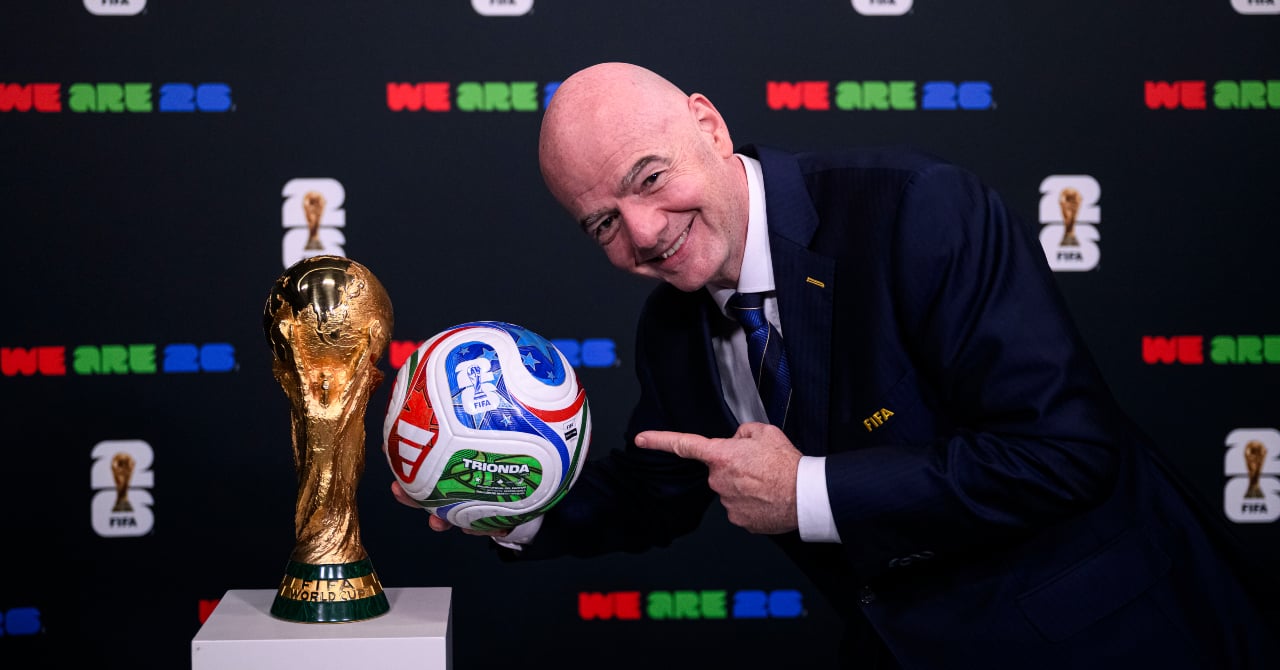
As Saudi Arabia prepares to host the 2034 World Cup, a major decision looms behind the scenes at FIFA. Gianni Infantino, its president, spoke of a profound change in the international calendar, likely to disrupt the habits of clubs and supporters. The objective: to adapt world football to new climatic and organizational realities. A silent revolution, but with immense consequences for the balance of the seasons.
Towards a World Cup in winter
Infantino has suggested that the 2034 World Cup could follow the example of Qatar 2022 and be contested in winter rather than summer.
“We are already discussing the best way to optimize the schedule,” he confided during the annual meeting of European clubs in Rome. The reason is the extreme temperatures in Saudi Arabia, which can exceed 39°C in July. On the other hand, a tournament in December would offer ideal conditions, around 22°C.
This decision, if confirmed, would mark the second World Cup contested outside the traditional summer dates. It would involve new adjustments for the European championships, with seasons starting earlier and ending later, similar to what was experienced in 2022.
A global reflection on the world calendar
The FIFA president does not want to stop at a simple isolated case. He calls for a complete overhaul of the international calendar: “ The best month for playing football, June, is almost not used in Europe. Perhaps we need to rethink the way we organize the seasons,” he declared. The idea would be to make international competitions more flexible according to climatic conditions and geographical realities.
Infantino thus pleads for “an open mind”,
believing that current models are no longer adapted to globalized football. A way to prepare the ground for more uniform competitions across the world, regardless of the hemisphere.
A decision with global repercussions
If this change were to be implemented, it would permanently reshape the world football calendar. European national championships, which still dictate the overall tempo, should review their organization to adapt to more frequent winter World Cups. Such a decision would also favor the countries of the Gulf or Asia, more capable of hosting tournaments during this period.
For Gianni Infantino, this transformation is inevitable:
“We have to think about the health of the players and the fan experience,” he concluded. After Qatar, Saudi Arabia is preparing to confirm a major trend: the future of world football could well be written… in winter.
