
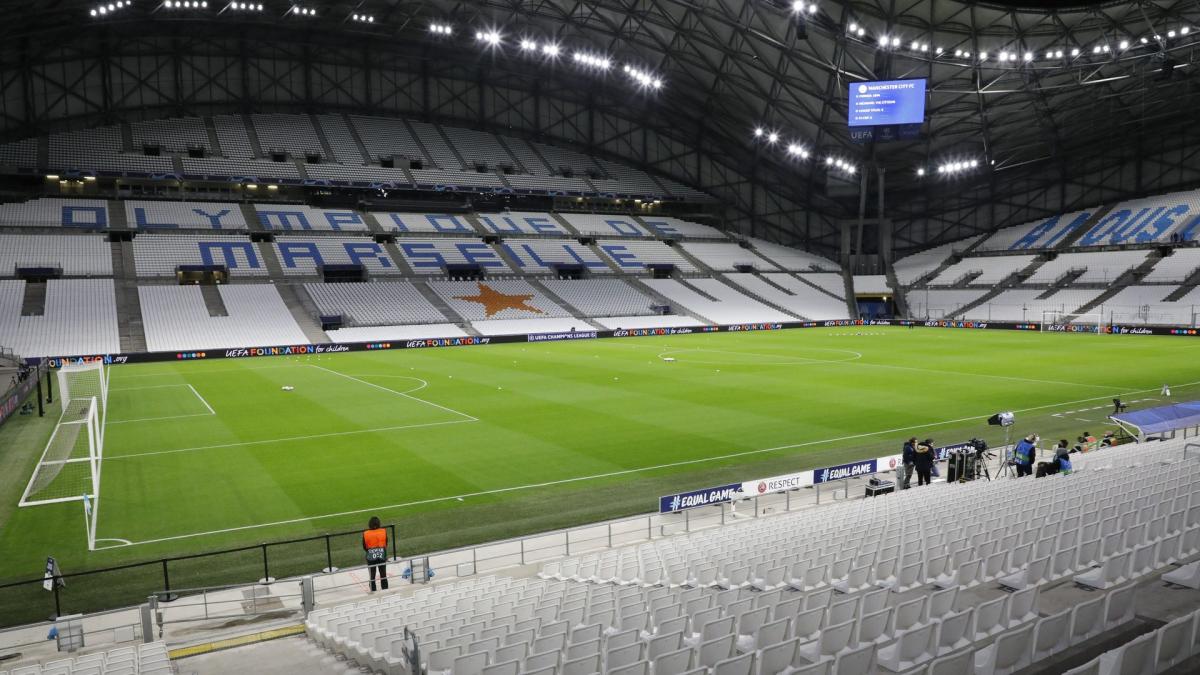
This Sunday, the surprise fell as a cleaver: the classic between Olympique de Marseille and Paris Saint-Germain, initially planned at the Vélodrome, was officially postponed. Threatened for several days by the bad weather that strikes the Bouches-du-Rhône, the match did not escape the decision of the prefect Georges-François Leclerc. The latter explained to theAFP that very significant precipitation and risks of urban runoff could occur near a stadium full to crack of 65,000 spectators. Based on article 548 of the LFP regulation, which provides that a match postponed due to bad weather must be replayed the next day if possible, the authorities and the professional football league studied the reprogramming options in an emergency. The meteorological and security context therefore prevailed over sports considerations, confirming the exceptional logistics tension around this shock of the French championship.
The final decision of the LFP, however, sparked a real media puzzle: the PSG-OM match will be held on Monday at 8 p.m., at the same time as the Golden Ball ceremony in Paris. A calendar that forces the Paris club to skip an evening that could have celebrated its stars. Ousmane Dembélé, expected for the most prestigious individual distinction, as well as other PSG figures such as Luis Enrique or Désiré Doué, will therefore not be able to attend the Parisian event, occupied by the Marseille meeting. OM, which had argued for this rapid reprogramming, thus won. Paris, for its part, is faced with a dilemma: respecting its sports obligations under penalty of general package, synonymous with victory on green carpet for Marseille, or upsetting its organization. For supporters and observers, this postponement illustrates how the French football calendar has become a mosaic of sporting, climatic and media constraints.
The prefect of the PACA region defends itself
The postponement of the classic OM-PSG was played above all on a public security imperative. Faced with weather conditions qualified as particularly unstable and dangerous – violent thunderstorms, risks of lightning floods and orange vigilance throughout the department -, state services preferred to anticipate rather than take the slightest risk with 65,000 spectators expected at the Vélodrome. The times of the peak of bad weather announced at the beginning of the evening coincided directly with the planned kick -off, which reinforced the argument of prudence. The prefecture therefore acted a cancellation order for the meeting for Sunday evening, then leaving the LFP the task of reprogramming the shock the next day. To the microphones of RMC SportGeorges-François Leclerc, prefect of the Provence-Alpes-Côte d'Azur region, explained itself on its decision: “What motivated the decision is the principle of wisdom. By that I mean that when there are Mediterranean thunderstorms, very violent thunderstorms, when there are risks of Mediterranean vintages, flashy vintage, especially in a city like Marseille, which is a city that you know, which has slopes, with possibilities or risks of streets only urban, the main recommendation that we give that I give my fellow citizens. The settlement of the football league infer that the match will be played 24 hours later. And so when I made my decision, it is common sense that has governed, I prefer that 60,000 people see 24 hours after the match in good conditions rather than in poor conditions, even incoherent and dangerous conditions. I can tell you that they weren't delighted, but they were very correct. They would have preferred the match to be held this evening, but given the information I gave them, and they accepted this decision. Anyway, they had no choice since I made a decree canceling the match. But they were very correct on the form, please believe it».
“”Second, you know the Vélodrome stadium well. On the Vélodrome stadium, if there was a stormy, violent episode, when the 65,000 spectators return to the stadium, you have a risk of crowd movement. However, precisely, the weather forecast tells us that there are risks of very strong thunderstorms between 6 p.m. and 9 p.m. That is to say precisely when the 65,000 people were going to go to the stadium». This decision, very legally supervised, is part of the logic of the application of the regulation which provides for the recovery or postponement of a match the next day when possible. Behind the scenes, this change of calendar had a domino effect on the organization of the two clubs. PSG had to adjust its program and return to Paris for the evening, while OM has maintained its training and its pre-match organization, while emphasizing a quick postponement in order to avoid an too close movement of its other deadlines. The holding of the match on Monday at 8 p.m., at the same time as the Golden Ball ceremony in Paris, places the Parisian club in a delicate situation since several of its players and its staff were expected to be present at the event. On the Marseille side, this choice responds to the constraints of a calendar already loaded with Ligue 1 and the Champions League. This reprogramming thus illustrates the direct impact of climatic and security imperatives on professional football and the drastic adjustments that clubs, organizers and players must operate in the emergency. One more affair which, between weather, calendar and divergent interests, is still tarnishing the image of French football.
Follow the Classico on Dazn with the Ligue 1+ offer
