
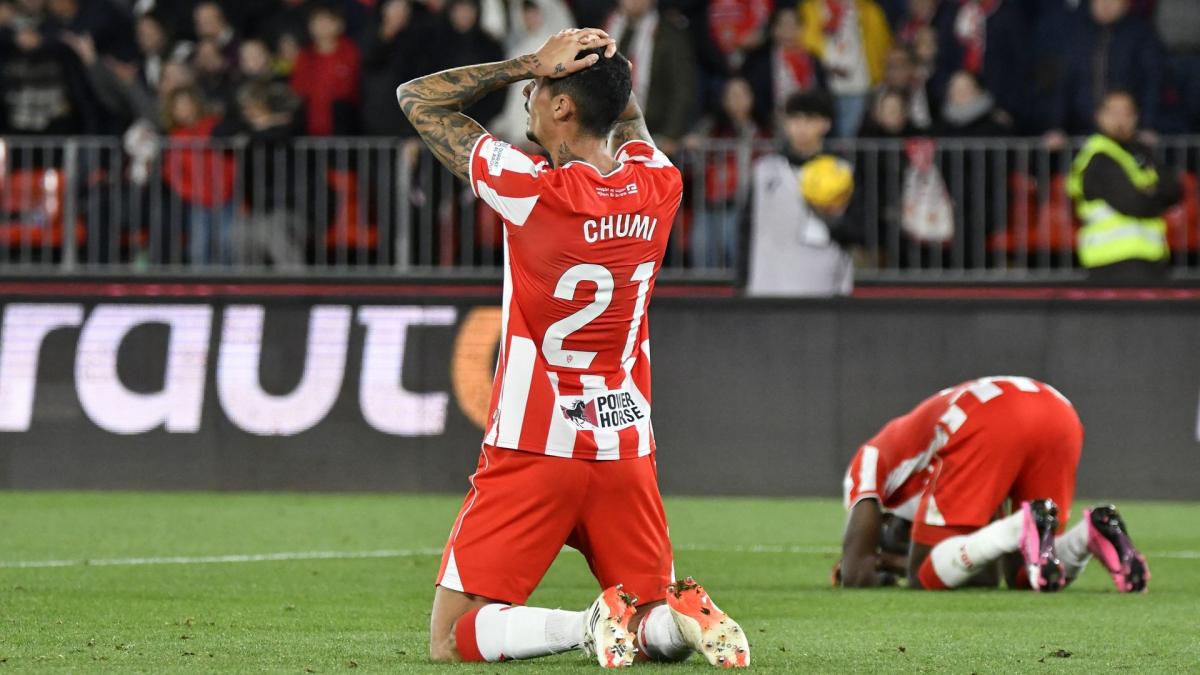
31 La Liga matches without knowing victory. This is a historic record that Almería would have done without. Monday evening, the Andalusians could not do better than a 2-2 draw against Sevilla FC, and, with their ten points in the league, already seem condemned to relegation. Beyond the causes of this monumental failure and the sporting considerations already mentioned in a long article published by us in February, it is quite interesting to note that this is one of the first Saudi failures in Europe.
With an important clarification to make, all the same: the club is owned by Turki bin Abdul Mohsen Al-Sheikh, who is certainly a very powerful man in Saudi Arabia, but the club does not belong to the PIF as may be the case from Newcastle. It is an individual project so to speak, and not a state project. It should also be noted that the project never had, for these first years at least, excessive ambitions. The goal has always been to stabilize the club in La Liga, before possibly aiming higher. Lay solid foundations, with a complete overhaul of the stadium and the construction of an elite training center coming for example, rather than burning the wings by going too high from the start.
What proves Javier Tebas right?
But there, things got off to a bad start, and after two seasons in the elite of Spanish football, Almería will return to the hell of the Iberian second division. It must be said that La Liga is a very complex playing field for foreign investors. It is no coincidence that very few clubs are bought in La Liga. Even if it is a project that will be judged over time, Almería seems for the moment to follow the same destiny as the Chinese projects in Granada and Espanyol. The Singaporean Peter Lim plunged Valencia into a real nightmare, while the misadventures of Malaga, today in the third division, are still fresh in people’s minds. And for good reason, making investments in Spain can be relatively complicated, for reasons linked to taxes and administration. But above all, La Liga imposes very strict financial fair play which prevents colossal investments in the transfer window for example.
Even if the richest man on the planet were to buy a Spanish club, he could not spend more money than what the club generates on its own through TV rights, merchandising or the sale of players. . It is therefore practically impossible to hope to climb to the top of the championship in a fairly short period of time. And more generally, nothing is being done to attract and facilitate the arrival of foreign capital. Javier Tebas himself regularly comes out against state clubs and prefers stable, long-lasting club models that develop through the training of players and strong local roots. When we see the repeated failure of certain projects, we can only agree with him…
