
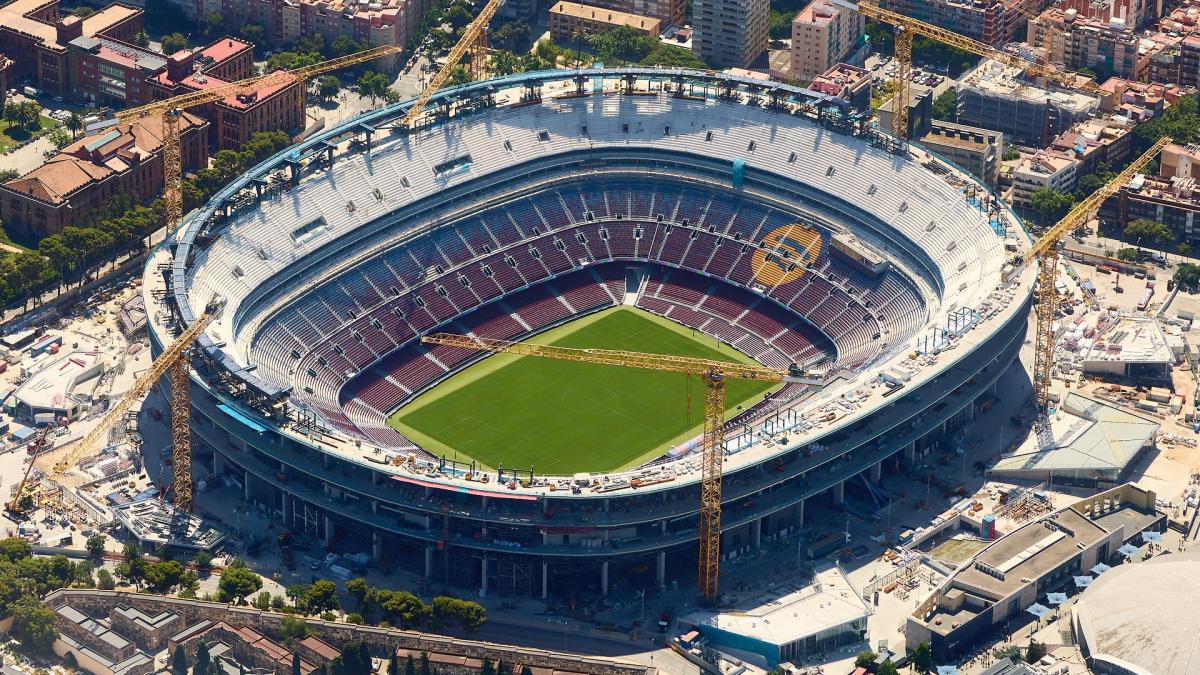
The financial reality of FC Barcelona is dizzying and would have scared away any self-respecting financial director. During the recent Assembly of Members (the socios compromisarios), the Barcelona management presented figures that were alarming to say the least. Despite a record turnover exceeding one billion euros (1.06 billion for the 2025/2026 season), the financial year still ended with net losses of 18 million euros. Worse still, shareholders’ equity shows a negative balance of 168 million euros. An extremely fragile economic situation which forced the board to validate the subscription of two new loans with a total value of 510 million euros (€300 million and €210 million), intended exclusively to finance the completion of the Spotify Camp Nou.
The overall debt of the Blaugrana institution now peaks at an unreal amount of 2.68 billion euros. A financial chasm divided into three parts: 1.8 billion directly linked to the renovation of the stadium, 710 million in bonds, and 170 million contracted via other loans. Faced with the members, the management does not hide it: the future of the club depends entirely on the success of this new stadium. “Until the stadium is completed, we will face difficult times. Cruyff always said that the money should be on the ground. From now on, we add: money on the land and for the land”assumed Ferran Olivé, the economic vice-president of FC Barcelona in comments reported by El País.
Barça is banking on Camp Nou to save the club
If the club agrees to increase its debt in the short term, it is to better boost its income in the long term. The objective declared by management is monumental: to achieve an overall turnover of 1.45 billion euros by the 2030/2031 season (with EBITDA pushed to €370 million). And in this pharaonic plan, the new Spotify Camp Nou will act as the real financial lung of the entity which will allow the Blaugrana club to regain certain room for maneuver in the transfer market. For the current 2026/2027 financial year alone, management is already counting on stadium-related revenues estimated at 285 million euros, an exceptional jump of 60 million compared to last season. But be careful, these figures still only represent a simple appetizer. The Blaugrana board’s strategy is clear: the stadium must no longer be a simple place of pilgrimage on match days, but a real cash machine operating 365 days a year.
First of all, it is good to remember that the classic gauge of the stadium will gradually increase to 90,000 spectators at the end of 2027 and up to 104,000 spectators once the work is completed in 2028, with the aim of the Champions League final that the Spotify Camp Nou will host in 2029. But the real economic revolution will take place in the extras. The club intends to increase its revenues thanks to the ultra-lucrative development of the new VIP spaces (lodges and hospitality), but also through ultra-optimized exploitation of catering, its famous museum, the organization of non-football events and naming contracts. The vital issue is no longer just to fill the stands, but to force each supporter and each passing tourist to consume much more, and for much longer within the complex.
The Catalan club has no shortage of ideas to make the Barça brand profitable
To further maximize the profitability of the premises, Barça of Lamine Yamal, Raphinha and Pau Cubarsi is also increasing XXL partnerships around the brand. The Assembly notably validated a 25-year agreement with Babylon Park for the installation of a huge children’s leisure park in the heart of the enclosure, as well as a lucrative contract worth 65 million euros with Ohana Real Estate to create a luxurious residential complex inspired by Barça in Dubai.
But while waiting for this giant entertainment hub to reach its full potential, the transition promises to be perilous. If the reigning Spanish champion has returned to his favorite venue for several months with a partial capacity of 72,000 supporters to which will be added nearly 7,000 additional places in VIP boxes, the management no longer has the right to make mistakes on the calendar. The slightest delay in the continuation of the project could undermine a budget already calculated to the millimeter and shake up the club’s economy. A very high-risk bet for Joan Laporta, who literally stakes the survival of the Catalan institution on the foundations of its future concrete jewel.
