
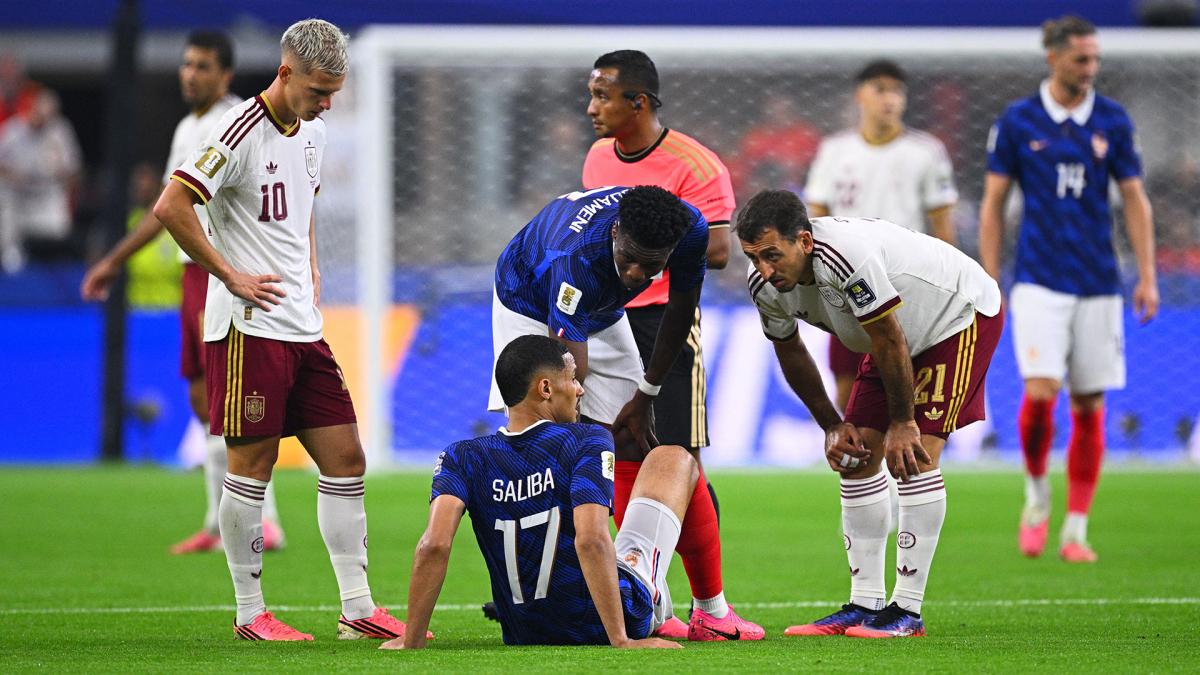
The 2026 World Cup ended with the coronation of Spain on Sunday evening, but for the French team, it had ended a few days earlier, on July 14, at the end of a completely missed match against La Roja. Designated favorite of the competition, the French selection was eliminated without really fighting, almost amorphous in the face of a confident Spain. And this match will leave traces whatever happens as so many of them have disappointed, or have been disappointed. By themselves.
Several players criticized, in veiled words, the choices of Didier Deschamps for this long-awaited semi-final. With the choice of Aurélien Tchouameni at the forefront, although the latter had missed the two previous matches and was not necessarily 100% recovered. The remarkable interim of Manu Koné alongside Adrien Rabiot pleased not only the supporters but also the players, who appreciated the midfielder’s ability to project. What Aurélien Tchouameni does not really have. This choice is not the only one to have caused discussion, like certain replacements during the hour of play.
William Saliba in the tough, an unequal investment in training
We also think of the case of William Saliba, hit in the back in the first period and completely unable to continue. An unfortunately predictable outcome as his state of health challenged his comrades during the competition. Saliba was spared, and sometimes had difficulty walking the day after a match. The volume and intensity of training were other topics of internal discussion. With this extended World Cup, with a large number of matches, it was not necessarily easy to maintain a crazy intensity in training, between those who were taking care of themselves, those who wanted to show themselves and those who were demobilized when realizing that they had little chance of playing.
Some took their foot off the gas, others stayed in the game despite a delicate personal situation, like Warren Zaire-Emery. Désiré Doué, who alternated between starting and replacing status, established a strict regime to stay as sharp as possible, which the Blues staff particularly appreciated. This World Cup will also have been an opportunity for Kylian Mbappé, whose status had been contested during the last international competition, to establish his role as leader. Focused on the collective, the captain played his role fully, by negotiating bonuses, managing certain stewardship problems with player families, and discussing leave and free days with the staff. He was also helped in this by Ousmane Dembélé, who got to grips with this role throughout the competition. Guarantees also on the future of this group, led by a few leaders who intend to always be there for the next coach.
