
The crisis had been brewing for several weeks on the Tottenham side, but the defeat against Newcastle served as the final detonator. A few hours after the nighttime announcement of the departure of Roberto De Zerbi from Olympique de Marseille, Spurs formalized the dismissal of Thomas Frank, who only arrived in June 2025 after his notable work at Brentford. The press release from the London club mentions “results and performance” insufficient, and the ranking speaks for itself with a worrying 16th in the Premier League, five points from relegation, despite qualification for the knockout stages of the Champions League obtained thanks to a favorable draw. With a starving average of 1.12 points per game, the lowest for a club coach in a comparable sample, Frank never succeeded in establishing a dynamic or easing internal tensions, leaving the impression of a stillborn cycle.
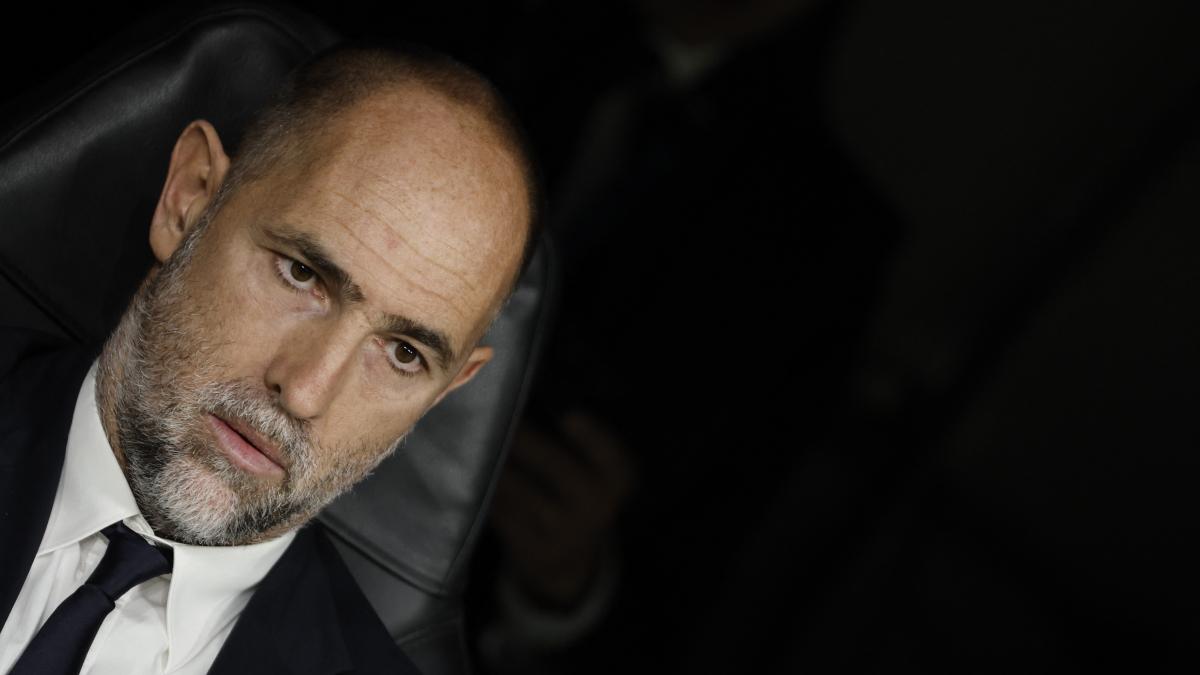
In the process, speculation multiplied in England around the succession. The leaders, led by the new management, were first considering an internal interim while waiting for a more prestigious name next summer, with the persistent dream of a return of Mauricio Pochettino after the 2026 World Cup. Several avenues have filtered through, including those of De Zerbi or even more experienced profiles in Europe. But Saturday morning, there was a twist. Tottenham have formalized the appointment of Igor Tudor for a short mission, with no guarantee of an extension. “It’s an honor to join this club at such an important time. I am aware of the responsibility that falls on me and my objective is clear: to bring more consistency to our performances and to play each match with conviction. This team has strong qualities, and my job is to organize it, energize it and quickly improve our results”explained the native of Split. An express choice, negotiated in a few hours according to the British press, which confirms the idea of a transition coach responsible for stabilizing the team until the summer. This lightning timing and this temporary contract surprised even in the corridors of the club, where some imagined a more lasting solution to turn around the season.
England pulls no punches
Across the Channel, the press appears to be divided, oscillating between fascination and skepticism. The Guardian first places this new episode in a local tradition: “In this context, the sacking of the coach has become a major element of the intrigue in each season (…) It would be as if Spurs did not have a management crisis. » The daily goes further in satire by comparing the coaches’ waltz to “a sort of public butchery”even making pornographic references: “it’s the football equivalent of those pornographic influencers on the internet who try to break the world record for the number of sexual contacts in 24 hours. It’s just bodies, numbers, men parading, endless disposable public couplings“. For his part, The Sun defends the idea that “Igor Tudor is the ideal manager for Spurs on a short-term mission”praising his aggressive style and his authority to straighten out “a toxic locker room”while recalling that he will be immediately tested during the derby against Arsenal. Same cautious tone Daily Mail*, where we emphasize the gamble represented by a technician who has never coached in England and rarely stayed more than one season on a bench.
In Italy, the announcement caused a small media earthquake. The Croatian coach maintains a solid reputation in Serie A, a championship where he left his mark as a player and then as a coach, notably on the benches of Juventus and Lazio. Several transalpine clubs had recently surveyed him in anticipation of possible technical changes, convinced of his ability to revive a group in crisis. Daily life Corriere dello Sport recalls that “the Croatian technician (…) succeeds Thomas Frank (…) His mission: to redress the situation of the team, currently 16th in the Premier League”while Football and Finance emphasizes that it has “less than three months to prove yourself and obtain an extension”proof that even in London, we do not necessarily see it as a long-term project. The media adds that this adventure could even lead to a symbolic European shock against Juventus if the draws align.
The fact remains that Italian enthusiasm is tempered by a lucid analysis of his career. There Gazzetta dello Sport sums up the ambivalence perfectly: “Everyone buys Tudor for the same reasons that we then do without it (…) the ideal replacement who never managed to find the position that would allow him to become a full professor. » The newspaper describes a technician “ad interim” by nature, capable of intervening quickly but rarely established permanently. This reading echoes the English doubts. Igor Tudor is admired for his immediate impact, feared for his lack of stability. Between British fascination and Italian analysis, his arrival at Tottenham therefore resembles less of a classic appointment than of a life-size experience. And in this media duel between the two countries, one certainty emerges. If the bet succeeds, he will become an unexpected hero. If he fails, he will definitely confirm his reputation as a transition coach.
