
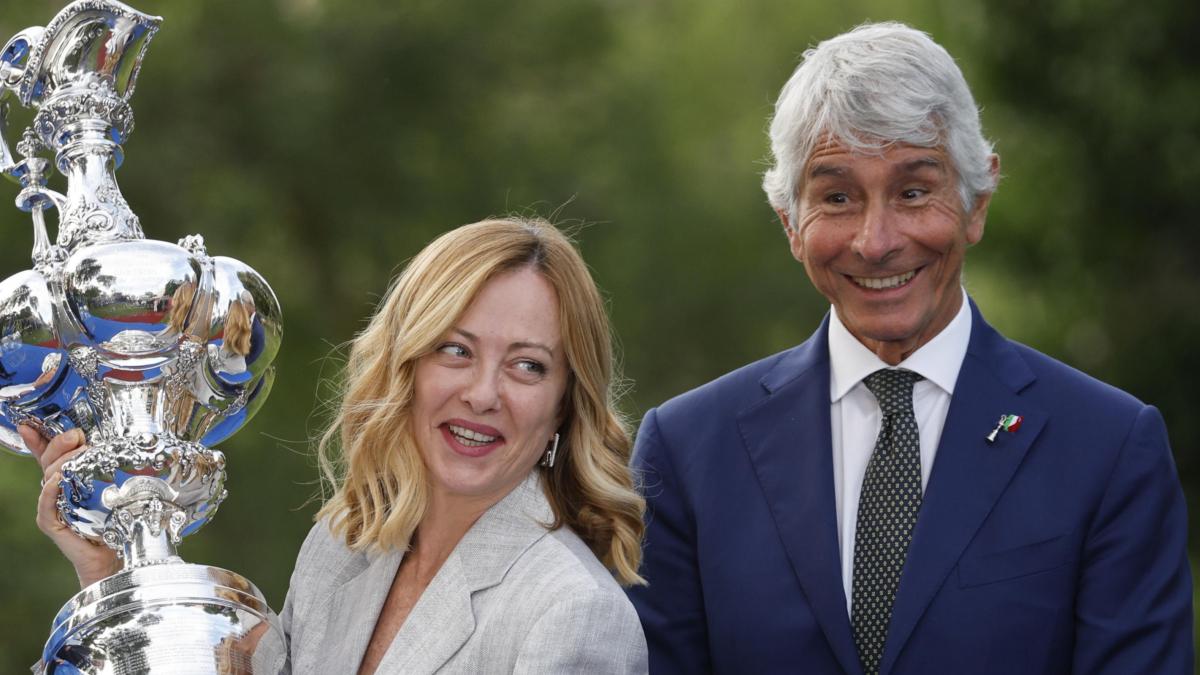
The Sport Decree, supported by the government of Giorgia Meloni and carried by the Minister of Sports Andrea Abodi, is part of a desire for institutional and economic refoundation of the Italian sports system. It aims to establish a series of structural reforms: creation of an independent financial surveillance commission for professional clubs, appointment of an extraordinary commissioner for sports infrastructure, more strict regulation of candidates for major international events, limitation of the mandates of federations presidents, and revision of the legal framework for sponsorship linked to the games of money. Behind these measures is emerging a clear strategy: to rely, strengthen transparency, lighten administrative blockages, and modernize the Italian sports ecosystem for major deadlines (Euro 2032, Mediterranean Games 2029, America's Cup …). For the government, it is an image lever, competitiveness and territorial cohesion.
But this decree provokes intense political and institutional debates, because it affects sensitive balances between the State, the federations, and the republican institutions. The Quirinal, seat of the Presidency of the Republic represented Sergio Mattarella, was reserved, in particular in the face of amendments such as that on the empowerment of Serie A, deemed contrary to the neutrality required by the statutes of international sport. Conversely, the Palais Chigi, seat of the Council represented by Giorgia Meloni, defends a more interventionist vision: for Meloni and Abodi, the state can no longer remain passive in the face of systemic drifts. The decree is also perceived as an attempt at political recentralization, which arouses tensions even within the majority, especially between technocrats and regional representatives, and fuels the distrust of sports federations, which fear losing their autonomy. This showdown reveals a wider fracture line in the place that the Italian state must occupy in the governance of sport – a simple referee, or engine actor.
A decisive week for the Sport Decree
This week was very decisive for the future of the Sport Decree, recalls the Corriere della will berelayed by CALCIO E FINANZA. The text, after an agitated parliamentary journey, arrives in the Senate for a second reading, under the pressure of time. If he is not promulgated before August 29, he will expire. But the stake exceeds the sporting content of the decree. It is a real political trial race, because the Quirinal expressed constitutional reserves on several articles, threatening to send the decree to Parliament even after a favorable vote. Andrea Abodi and Giorgia Meloni are therefore trying to adjust the text at the last minute to avoid an institutional blockage. Two measures are targeted: one concerning the methods of recruiting personnel within the future Club Financial Supervisory Commission, the other on the jurisdiction of the courts called upon to settle disputes with this commission. These tensions reflect the balance of power between the Chigi palace and the Quirinal, in a context of saturation of summer decrees-laws, which irritates President Mattarella. If the fixes made are not enough, the decree could be failed, forcing the government to reopen the whole file at the heart of the summer, a scenario that the majority want at all costs to avoid.
And in the aftermath of intense institutional negotiations, the Meloni government was forced to yield to the objections of the Quirinal on several key points of the Sport Decree, partially emptying the text of its most controversial devices. This reversal occurred after a day marked by delays, political tensions and internal disagreements. In addition to the two already targeted provisions, the executive intended to preserve a major article: that entrusted to the public company “Sport e Salute” the extended management of sporting events exceeding 5 million euros in public funding. But this measure aroused the firmer reaction of President Mattarella, who deemed it not in accordance with the emergency criteria imposed on the decrees-laws. Faced with the inflexibility of the Quirinal, and despite the resistance of Abodi, the Minister of Relations with Parliament, Luca Ciriani, was responsible for transmitting the presidential red line. An attempted withdrawal via a specific bill was envisaged, then blocked by the opposition. The same evening, an amendment was adopted to remove the article on “Sport E Salute”, sealing a clear setback for the government.
The decree, now amputated by its three most political articles, was approved in the evening in the Senate by hand, and will still have to spend one last time in the Chamber of Deputies to be definitively promulgated. But it comes out weakened and depoliticized: the abolition of the disputed provisions neutralizes the government's ambitions to structure a centralized governance of major sporting events through “Sport E Salute”, while slowing down attempts at accelerated reform of the sports public service. For the executive, the text remains symbolically important, but loses its strategic component on the institutional control of sport. The government now intends to return to the fall in the fall, by tabled a more structured bill, this time outside the emergency framework, to have these same measures adopted after the summer break. This decline, constrained by the vigilance of the Quirinal, marks a moment of strong institutional tension in relations between President Mattarella and the Meloni government.
A direct impact on football
The Sport Decree introduces a new financial surveillance system for professional clubs via an independent commission, placed under the aegis of the State and no longer only of sports federations. This measure directly targets frequent accounting drifts in Italian football, marked by clubs operating at a loss, with opaque balance sheets, tax arrears, or risky investments. The Commission would have the power to analyze the accounts of Serie A, B and C clubs, to alert in the event of serious imbalances, or even to impose sports or administrative sanctions (rejection of license, transferring restrictions). For some, this could lastingly professionalize the sector, reduce bankruptcies and protect the ecosystem. For others, this introduces state guardianship that could come into conflict with the autonomy of the leagues. In any event, this would oblige clubs with more budgetary rigor, which would perhaps brake on immediate investments, but would strengthen their solidity in the medium term.
Another pillar of the decree concerns the renovation of sports infrastructure, historically one of the weak points of Italian football. With the appointment of a special stadium commissioner, the government wants to unlock projects often blocked for years by administrative slowness or conflicts of jurisdiction between clubs, municipalities and regional authorities. The objective is twofold: to allow Italy to be ready for Euro 2032 (which it will co-organize with Turkey), but also to provide the clubs with modern, profitable stadiums, and in accordance with UEFA standards. This would allow clubs to generate more stable structural income (ticketing, hospitality, naming, extra-sporting events) and attracting foreign investors. But this transition requires significant resources, and the decree does not guarantee massive public funding: clubs often have to find private partners or self -finance renovations, which could accentuate inequalities between northern clubs (Inter, Milan, Juventus …) and those more peripheral or southern.
Finally, the decree plans to revise the regulatory framework around sponsors linked to sports betting, by softening the very strict “dignity decree” of 2018, which prohibited the advertising of bookmakers in sport. This ban had deprived Italian clubs – notably from Serie A – tens of millions of euros in income per season, unlike their Spanish or English counterparts, where these sponsors remain omnipresent. The new text proposes to reautorize this type of sponsorship under certain conditions (ceilings, ethical charter, protected times), which could allow clubs to find powerful partners, especially in Asian and digital markets. In parallel, the decree limits the duration of the mandates of the presidents of federations, which aims to rebalance the institutional power, in particular between the Figc and the government, but opens a latent conflict with international bodies such as UEFA or FIFA, very hostile to any political interference. If this showdown is not controlled, Italy could theoretically face sanctions (such as competition exclusions), even if a compromise is being negotiated to calm tensions.
