
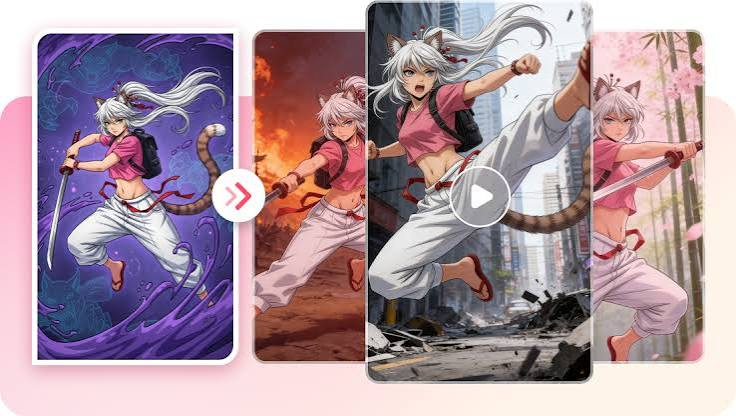
Anyone who’s watched a great anime fight knows the magic isn’t only in the punches. It’s the way the camera whips around a clash, snaps into a close-up on a clenched fist, and then pulls back to show how far someone just flew. Those shots usually take a team of animators months. From image to video, you can start from a single illustration and get a cinematic exchange in minutes. Dreamina and its Seedance 2.5 model handle the movement, and you direct the camera with your words.
Why fight scenes live and die by the camera
A fight can be well choreographed and still feel flat if the camera just sits there. Anime gets its punch from perspective: low angles that make fighters loom, quick pans that follow a kick, and sudden stillness right before impact. Think of the camera as a third fighter in the scene. When you describe its movement along with the action, the same two characters can feel rushed, heavy, graceful, or brutal. That’s the lever you’re going to pull.
Picking a still that’s ready to fight
Some illustrations animate far better than others. Look for art with:
- A strong, readable pose: weight shifted, limbs clearly separated
- A clean silhouette: you can tell who is who at a glance
- Room around the figures for the camera to travel
- An implied direction: a swing, a lunge, a leap
- A simple background: less clutter, fewer surprises
Static, front-facing poses tend to look stiff once they start moving.
Throw the first punch in three Dreamina steps
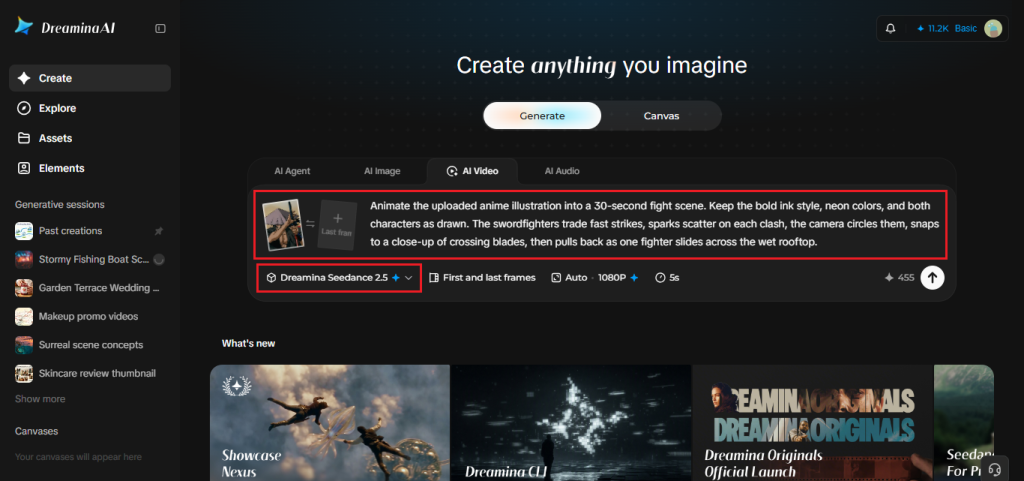
Step 1: Upload your reference image and write the prompt
Visit Dreamina, log in, and choose the AI Video section. Click “Add reference image” and upload your illustration. Then describe the action and the camera in your prompt.
Try this for a 30-second video: Animate the uploaded anime illustration into a 30-second fight scene. Keep the bold ink style, neon colors, and both characters as drawn. The swordfighters trade fast strikes, sparks scatter on each clash, the camera circles them, snaps to a close-up of crossing blades, then pulls back as one fighter slides across the wet rooftop.
Step 2: Generate your video
Select Seedance 2.5 and set how long the scene should run. Choose 16:9 for YouTube or 9:16 for TikTok, then click Dreamina’s icon and wait for the render. Wide frames suit big camera sweeps, while vertical works for single-fighter duels.
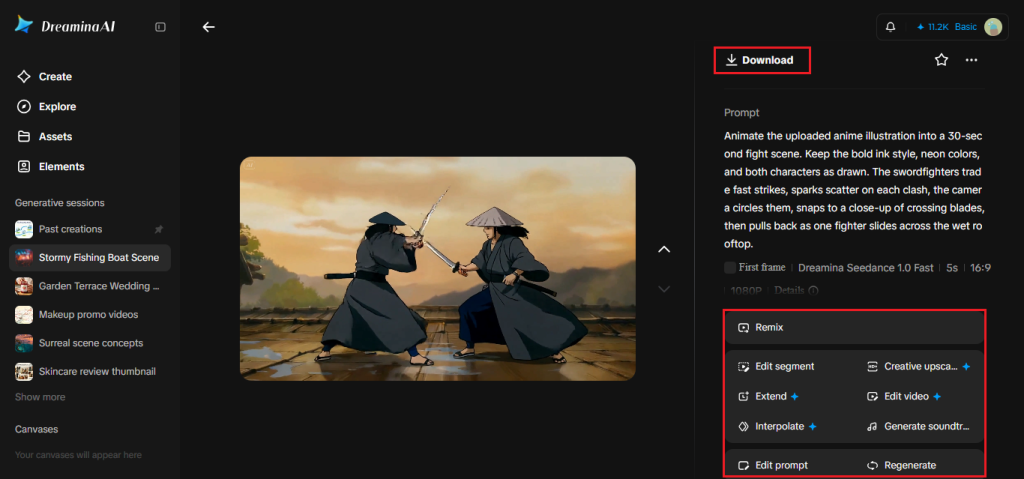
Step 3: Enhance and export
Run Upscale to sharpen the linework and use Generate soundtrack to add driving music. Export the clip and share it. If the fight feels too slow, add words like “rapid” or “explosive” and try again.
Camera moves that sell the hit
Name one or two camera moves per prompt rather than a long list. An orbit around the fighters adds scale. A fast whip pan sells a sudden strike, while a slow push-in builds tension before a clash. Low angles make characters feel powerful, and high angles make them look small and cornered. Save the extreme close-up for the moment of impact, then pull back to show the aftermath. Combine the camera idea with one clear action, and the shot reads cleanly.
What Seedance 2.5 does for fast action
Fights are one of the hardest things for a video model to hold together, and a few Seedance 2.5 upgrades help.
Motion that follows the choreography
Motion transfer is far more consistent, so a spinning kick looks like one connected movement instead of a collection of poses.
Impact with real weight
Hits carry a sense of force, which helps a punch feel like it lands instead of passing through its target.
Space that stays coherent
The model keeps the geometry of the scene intact during dynamic sequences, so the rooftop doesn’t rearrange itself mid-fight.
Time for a full exchange
Clips run up to 30 seconds, and an ultra-long beta extends to 180 seconds, which leaves room for a complete back-and-forth.
Speed lines, glows, and freeze frames
Anime has its own visual language. Mention speed lines, impact flashes, energy glows, and brief freeze frames in your prompt, and they’ll often appear. Use them sparingly. A single freeze frame right at the moment of contact reads as stylish, while five in a row reads as a glitch. If you want the clip to feel hand-drawn, ask for “limited animation” and “bold outlines” so the motion keeps a slightly stylized rhythm.
Planning a three-beat exchange
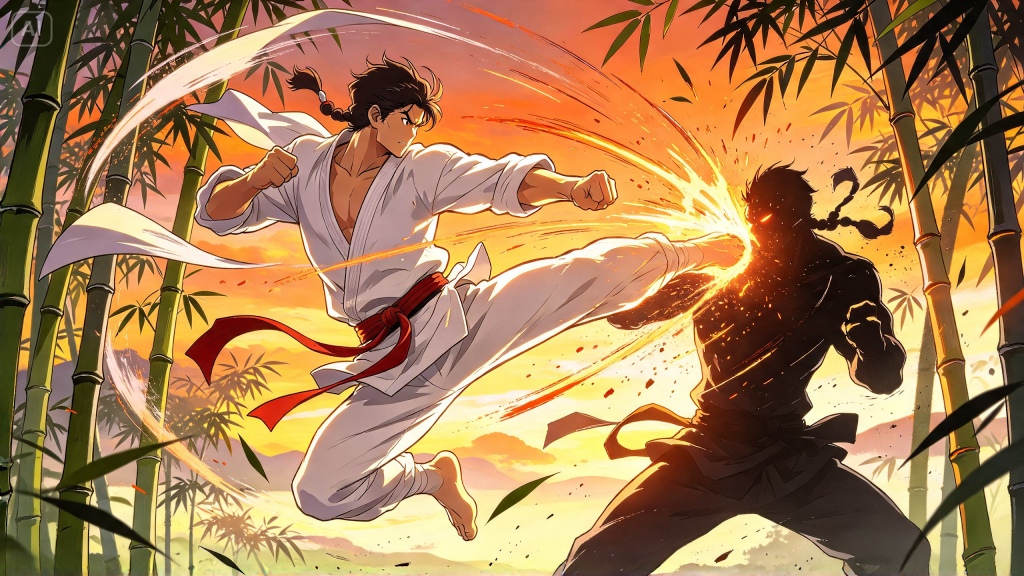
A short fight works best with a simple structure. Start with a tense standoff where the camera barely moves. Move into the clash, with fast strikes and a camera that circles or tracks. End with the aftermath: one fighter stumbling back, dust settling, the camera slowly pulling away. Writing each beat as a sentence in your prompt gives the clip a shape, and viewers will feel it even if they can’t explain why.
Roll camera on your own fight
Great fight scenes are about rhythm, perspective, and a little exaggeration, and you can direct all three from a prompt. Dreamina and Seedance 2.5 take care of the animation so you can focus on the drama. Pick your favorite illustration, upload it, and write your first camera move. The next epic showdown might already be sitting in your sketchbook.
