
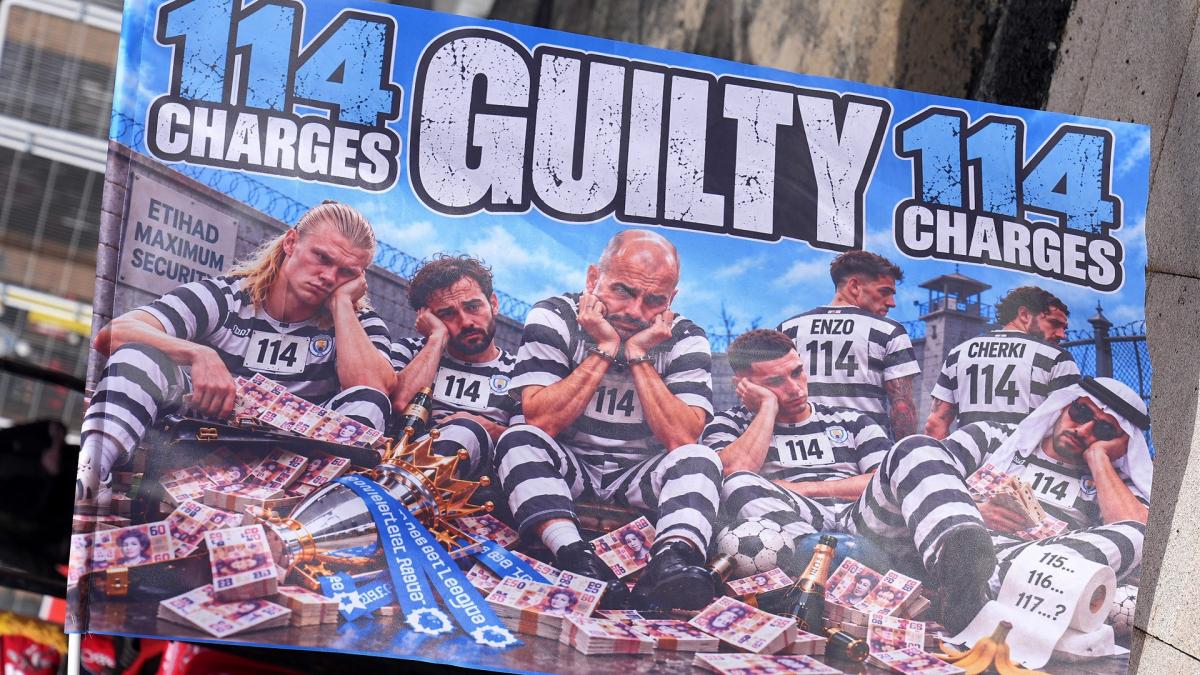
On the eve of a shock against PSG, Manchester City finds itself at the heart of a new storm which goes far beyond the borders of football. While the Mancunian club is already shaken by the conclusions of the independent commission responsible for examining the 115 accusations of alleged violations of the financial rules of the Premier League, new revelations from the Sunday Times and of The Times highlight the close links established over the years between the Emirati interests of the Skyblues owners and the British authorities. This time, it is the real estate operations carried out in Manchester, the confidentiality clauses imposed on local elected officials and the relations maintained by Andy Burnham with the club which attract attention. Enough to place the British government in a particularly delicate situation, while the Manchester City affair takes on an ever more important political and economic dimension.
The first part of these revelations concerns real estate deals concluded between Manchester City Council and companies linked to Abu Dhabi United Group (ADUG), the structure associated with Sheikh Mansour, owner of Manchester City. According to documents consulted by The Sunday Timesseveral contracts signed in recent years included particularly restrictive confidentiality clauses. In some cases, municipal officials could not communicate commercial information about real estate projects without obtaining written permission from other parties. A February 2014 agreement concerning the development of the Eastlands sector, around the Manchester City stadium, provided in particular that no announcement relating to the contract, activities or assets of the company concerned could be made without prior agreement. Similar provisions were included in a collaboration agreement concluded in 2015 and in a contract for the Central Retail Park in 2019. These arrangements concerned Manchester Life, a company established in 2014 by the city council and Emirati interests to develop housing in the east of the city. If confidentiality clauses are common in real estate transactions, their extent raises questions because public land was involved and the precise financial benefits for taxpayers remain difficult to establish.
Bad buzz for Downing Street
These agreements take on an additional dimension in light of the conclusions reached in Manchester City’s financial file. After several years of investigation, the independent commission responsible for examining the 115 accusations made by the Premier League concluded, according to information reported last month, that the club had broken almost all of the rules examined as part of a hidden financing system involving commercial contracts deemed fictitious. The findings reveal more than £800 million in funding allegedly injected into the club indirectly, through deals presented as commercial. Manchester City disputes the findings and has launched an appeal process. The case had already caused numerous tensions around the governance of English football, but the real estate revelations now open another front. THE Sunday Times points out that local officials have been subject to confidentiality obligations in the context of projects involving companies linked to the club owner. Former city council leader Richard Leese defends Manchester Life’s record, saying its investments helped transform previously neglected areas and generate new revenue for the city. The city council also claims that these clauses were customary and did not give the Emirati partners unlimited veto power over its communications or legal obligations.
At the heart of this sequence is Andy Burnham, now British Prime Minister, who led Greater Manchester from 2017 to July 2026. According to information published Monday by The Times, he was invited to three Manchester City meetings at the Etihad Stadium as well as to an Ed Sheeran concert organized at the club during his term as mayor. In September 2019, he was notably photographed in the stands alongside Khaldoon Al Mubarak, the president of Manchester City, during Vincent Kompany’s farewell match. Greater Manchester authorities also confirmed that a formal meeting took place in 2021 between Burnham and Al Mubarak, as part of an investment summit organized by the UK Department for International Trade. According to the Metropolitan Authority, the invitations received by Burnham had been declared according to the usual procedures. The subject nevertheless became political after the statements of the Prime Minister, who said he was particularly concerned by the possibility of seeing the Emirati owners sell Manchester City following the conclusions of the independent commission, calling them major partners in the transformation of the city. Kemi Badenoch, the leader of the Conservatives, and Ed Davey, the leader of the Liberal Democrats, then called for more transparency on his exchanges with the club and its owners. Burnham promised to make details of his professional dealings with them public when he was mayor, while ensuring football financial matters must follow their independent process. Downing Street also reiterated that no club was above the rules.
Beyond the personal case of Burnham, it is therefore the entire relationship established between Manchester, investors from Abu Dhabi and British institutions which finds itself under pressure. For almost two decades, Emirati capital helped transform the club, but also part of the city, notably thanks to large-scale real estate operations. According to the Sunday Times’ revelations, the Greater Manchester Metropolitan Authority also provided three loans totaling £55 million to Emirati-backed property projects during Burnham’s tenure. Criticisms now focus on the transparency of the agreements, the guarantees offered to investors and the ability of public authorities to precisely demonstrate the benefits obtained in return for their commitment. An independent audit mentioned in a municipal governance report published in 2025 had already noted weaknesses in the documentation and monitoring of certain historic agreements. Local authorities and Manchester Life, however, defend the economic benefits of the projects and dispute the idea that the clauses would have allowed investors to freely control public declarations. At the same time, questions about the relationship between Emirati interests and British power are intensifying, while future major investments in the United Kingdom could be affected by the consequences of the case. As the meeting against PSG approaches, Manchester City must deal with a crisis which no longer only concerns its financial balance sheet or its sporting future, but also the transparency of its relations with public institutions.
